Five Discoveries from New South Wales' Music Festival Drug Checking Trial
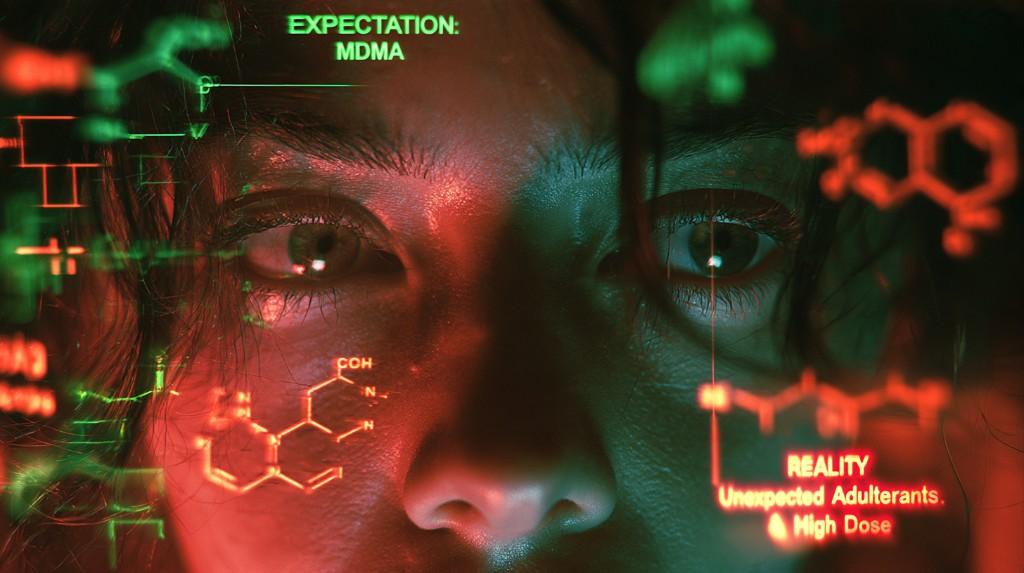
University of Sydney evaluation of NSW’s 2025–26 festival trial—1,475 samples, first-time harm-reduction reach, fewer hospitalizations, and statewide alerts.
Introduction
Music festival culture has long been vibrant and passionate. However, the illicit, hidden use of substances and the unknown chemical composition of drugs have long posed a massive blind spot for public health and event safety. Historically, societal debates around festival harm reduction were trapped in a polarized framework of "total prohibition" versus "emergency post-incident rescue," lacking proactive, forward-looking mechanisms to engage directly with crowds.
To break this impasse, the New South Wales (NSW) Government funded a 12-month music festival drug checking (pill testing) trial from March 2025 to February 2026. Spanning 12 festivals and covering 311,769 attendees, the trial represented a deep collaboration between professional analytical chemists from NSW Health Pathology’s Forensic and Analytical Science Service (FASS) and peer workers from the NSW Users and AIDS Association (NUAA).
Over the full year of operations, the team completed 1,010 service visits (attracting a total of 1,846 attendees) and analyzed 1,475 drug samples using advanced chemical testing. An independent evaluation report conducted by a team from the University of Sydney not only demonstrated the tangible impact of the service, but also delivered five highly insightful, disruptive core findings that overturn traditional assumptions.
1. Reaching the "Unreachable"—69% of Users Had Their First Drug Safety Conversation
In festival settings, the hardest group to reach is often young, occasional substance users who lack systematic knowledge about health risks. The evaluation data showed that the drug checking service successfully opened an educational pipeline that traditional health systems had struggled to establish:
- A breakthrough first conversation: Prior to visiting the drug checking service, a staggering 68.5% (approx. 69%) of service users reported that they had never in their life spoken to a medical professional or harm reduction worker about their substance use.
- Precise reach to high-risk demographics: The service precisely reached the population most vulnerable to accidental drug harms—85.5% of service users were under 30 years old (with those aged 20–24 accounting for 50.2%), and the majority were male (62.1%).
The key to this breakthrough lay in the trial's cross-disciplinary operational model. FASS analytical chemists provided objective, undeniable composition data, while NUAA peer workers—drawing on lived or peer experience—guided participants through the process, translating cold chemical data into non-judgmental, de-stigmatized, and accessible health protection advice.
Even more remarkably, the service served as a gateway to multi-layered harm reduction: 21.6% of service users received free take-home naloxone nasal spray during their consultations alongside bystander overdose response training. This effectively extended the safety net to cover potential overdose risks from synthetic opioids (such as nitazenes).
2. Seeing Is Not Believing—8% Contained Unexpected Substances, and High-Dose MDMA Posed Severe Risks
The unpredictability of the illicit drug market is a primary driver of acute toxicity and fatal overdoses. Real-time on-site testing confirmed a substantial gap between expectations and reality:
- Composition discrepancies & dangerous adulteration: Real-time on-site testing revealed that 8.1% of samples contained unexpected substances (either alone or mixed with the expected drug). Testing even uncovered extreme black-market adulterations, such as detecting heroin in a sample believed by the user to be cocaine, as well as novel synthetic cathinones and ketamine analogues (such as 2-fluoro-2-oxo PCE).
- The toxicity trap of high-dose MDMA: Among all MDMA tablets or capsules where dosage could be estimated, 4.4% contained high doses (>150 mg free base). From a technical standpoint, "free base" refers to the active MDMA molecule itself. Since street drugs are distributed in hydrochloride (HCl) salt form, 150 mg of free base actually equates to over 180 to 200+ mg of street drug weight. For first-time or low-tolerance users, consuming such pills carries a severe risk of fatal toxicity.
Access to immediate chemical results significantly influenced user decision-making. The data indicated that when testing revealed only unexpected substances, 30.0% of users chose to discard their drugs directly into on-site amnesty bins, 37.5% indicated they would reduce their dosage, and 7.5% stated they would not use the substance at all. Overall, 4.1% of all tested samples across the trial were voluntarily destroyed by attendees on-site.
When attendees learn the true contents of their substances and actively choose to reduce doses or surrender high-risk drugs, this behavioral change immediately translates to downstream event first-aid—directly alleviating pressure on both on-site medical tents and off-site hospitals.
3. Alleviating Healthcare System Burden—Hospitalizations and ICU Rates Dropped Significantly, with Multiple Zero-Presentation Festivals
Drug checking is far more than a laboratory test; it acts as an effective relief valve for event emergency medical systems. The report compared data from the trial festivals against historical control data from the same festivals over the preceding two years:
- Overall reduction in medical burden: Drug-related hospital presentations dropped from an average of 3.6 per day down to 2.3 per day.
- Marked decrease in severe cases: The most urgent triage categories (Triage Category 1 or 2, requiring immediate or emergency care) dropped from 1.6 per day to 0.7 per day. ICU admissions similarly fell from 0.9 per day to 0.6 per day.
- Zero-presentation milestone: Four festivals (Hyperdome, Yours and Owls, Laneway, and Mighty Hoopla) recorded zero drug-related hospital presentations while drug checking was operating.
Beyond preventing incidents before they occurred, on-site medical staff pioneered a new operational model by submitting 5 critical samples directly to the testing service during patient care.
One notable case study demonstrated how rapid chemical testing saved emergency resources: A male attendee presented with severe, unexpected toxic symptoms after ingesting two capsules. With consent, the medical team submitted his third remaining capsule to the drug checking tent. Testing quickly confirmed that the capsule contained a high dose of 125 mg MDMA free base per pill, effectively ruling out unexpected lethal adulterants. Equipped with this information, the medical team administered targeted supportive care and assisted the patient in destroying the remaining capsule. This real-time data allowed the patient to recover safely on-site, entirely avoiding an otherwise inevitable ambulance transfer and emergency department admission.
This rapid chemical analysis not only prevented hospital transfers on an individual level, but on a broader public health dimension, it functioned as a statewide early-warning radar.
4. A "Super-Radar" Strengthening Public Health Early Warning Systems—Contributing 80% of Statewide Alerts
Traditional public drug surveillance systems rely on post-overdose hospital records (such as the PRISE system) or police seizure samples (such as the CoSMoSS system), which suffer from limited sample sizes and significant reporting lags. On-site festival drug checking demonstrated unprecedented data transmission speeds and monitoring capacity:
- A quantum leap in surveillance capacity: The drug checking service analyzed 1,475 samples over 12 months, vastly outperforming the same festival period's collection of just 16 samples via the PRISE system and 194 samples via the CoSMoSS system. This 75- to 90-fold surge in sample volume enabled public health authorities to track circulating drug trends with high precision.
- From "post-incident reaction" to "real-time scanning": While traditional channels often take days or weeks to return results, on-site testing generated actionable intelligence within 1 hour. This shifted public health surveillance from passive post-overdose tracing to proactive, real-time scanning of community drug markets.
- Driving statewide public health warnings: During the trial, 8 out of the 10 public drug warnings issued by NSW Health were directly supported by data from the festival drug checking service (including real-time alerts regarding high-dose MDMA, ketamine analogues, and synthetic cathinones).
This early-warning mechanism protected not only festival attendees on-site, but also—via rapid public health communications—the broader community across the state. But how does such a high-performing system hold up in terms of operational costs and financial sustainability?
5. Demonstrating Long-Term Economic and Operational Efficiency—Ongoing Costs Drop to $380 AUD Per Sample
From a fiscal and resource-utilization standpoint, the trial demonstrated strong economies of scale and cost-optimization potential. The total cost during the setup phase of Year 1 was $786,340 AUD (which included one-off capital expenditures such as analytical equipment purchasing). As procurement logistics matured, staffing schedules optimized, and testing workflows stabilized, operational costs showed a clear downward trend.
Under an "ongoing operational model"—which excludes one-off equipment investments and assumes a 50% laboratory confirmatory testing rate—economic metrics improved significantly. The evaluation data shows that as the service reaches operational maturity, the ongoing cost per sample drops to $380 AUD, making its overall cost structure highly competitive when compared to earlier trials in the Australian Capital Territory (ACT) and Queensland.
Conclusion
The independent evaluation report clearly proves that festival drug checking is far more than simple chemical testing. It is a comprehensive harm reduction tool that deeply integrates real-time analytical chemistry, peer education, clinical medical care, and statewide public health surveillance.
Combining quantitative data and field observations, the report identifies festival environments that stand to gain the highest public health benefits from drug checking:
- Music genre: Festivals dominated by electronic dance music (EDM / Hardstyle).
- Attendee demographics: Younger, potentially inexperienced drug-using populations, particularly young males.
- Event scale & location: Large, multi-day camping festivals held in regional or remote areas.
- Environmental conditions: Hot weather and high-temperature environments.
The trial data provides a solid, objective foundation for future public health policy. With chemical data, medical offloading evidence, and economic feasibility established, the report leaves policymakers and society with a profound question to consider: When data clearly proves that real-time information saves lives and reduces medical burdens, how should we redefine festival safety and public health strategies moving forward?