Why Nasal Sprays Could Be a Game-Changer for Harm Reduction: 5 Key Insights from the Latest Pharmaceutical Research
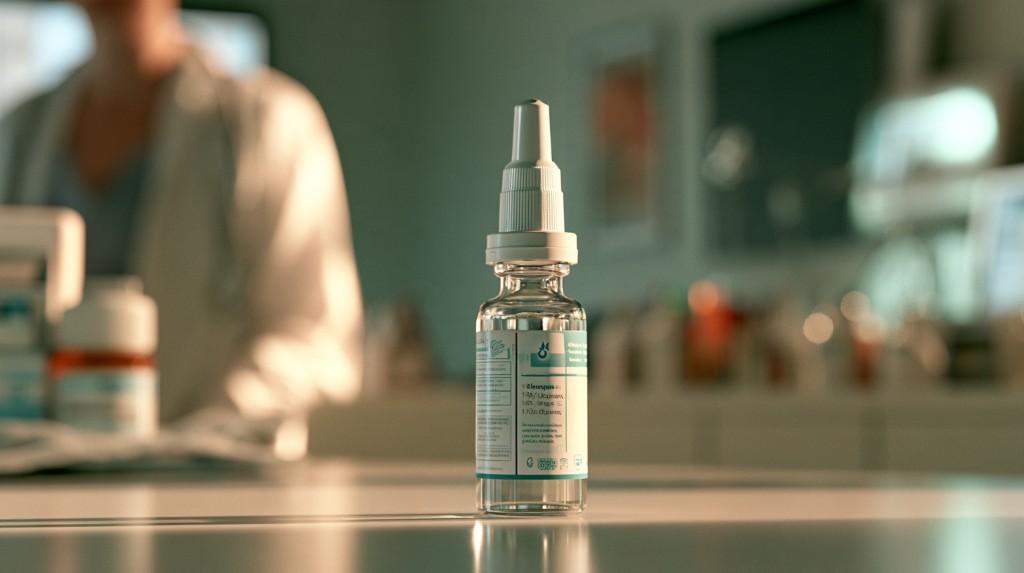
Delforge (2026) in Harm Reduction Journal—VDNS frames saline nasal spray delivery to cut mechanical nasal trauma, quantify doses, and spell out substance-specific limits.
Introduction
In the field of public health substance harm reduction, traditional messaging and intervention strategies have long focused on personal hygiene maintenance, avoiding the sharing of snorting tools (such as straws or rolled banknotes), and substance testing. However, the physical state of the substance itself—specifically whether it enters the nasal cavity as a dry solid powder or a liquid solution—and its direct physical and chemical impact on nasal mucosal tissue has rarely been systematically examined in academic and clinical literature.
A pharmaceutical study published in the peer-reviewed *Harm Reduction Journal* (Delforge, 2026) offers a breakthrough perspective on this issue. The study introduces a practical framework known as Volumetric Dilution Nasal Spray (VDNS). Drawing on pharmaceutical principles of intranasal drug delivery, VDNS provides a biologically sound, low-barrier solution to reduce the nasal tissue damage and overdose risks associated with traditional insufflation (snorting).
1. The Nose Is Not Designed for Dry Powders: The Triple Hidden Damage of Traditional Insufflation
From an anatomical and physiological perspective, the human nasal mucosal structure is exceptionally delicate. The study highlights that the nose’s primary defenses rely on specialized tissue structures: "The nasal mucosa is a highly vascularized and ciliated epithelium whose primary physiological functions are filtration, humidification, and immune defense."
When users inhale dry powder at high velocity, the nasal cavity cannot carry out these protective functions effectively, leading to tissue trauma. The literature outlines three main mechanisms through which dry powder insufflation causes nasal pathology:
- Mechanical trauma: Coarse, inadequately crushed crystals or insoluble adulterants and cutting agents (such as talc, lactose, or levamisole) act as micro-abrasives under high-speed airflow. This causes repetitive friction, laceration, and erosion to the nasal vestibule, inferior turbinates, and Kiesselbach’s plexus on the anterior septum.
- Chemical & cytotoxic irritation: The substance itself and its cutting agents exert direct cytotoxicity and inflammatory effects on epithelial cells. Even for non-vasoconstrictive compounds, high local concentrations disrupt cellular integrity.
- Vasoconstriction-induced mucosal ischaemia: This mechanism is prominent with cocaine, which inhibits norepinephrine reuptake and triggers severe, prolonged local vasoconstriction. Chronic ischemia leads to mucosal necrosis. In severe cases, it can cause Cocaine-Induced Midline Destructive Lesions (CIMDL), leading to septal perforation and extensive destruction of surrounding soft tissue and bone.
Furthermore, these mechanisms impair mucociliary clearance, leaving the nasal cavity vulnerable to pathogens and increasing the risk of bacterial and fungal sinus infections. Additionally, when users share rolled bills or straws, torn and bleeding mucous membranes allow blood-contaminated tools to serve as transmission vectors for Hepatitis C (HCV) and HIV.
2. Harm Reduction Inspiration from Pharma: Converting Solid Powders into Quantified Aqueous Solutions
To counteract the physical and chemical damage of dry powders, the core concept of VDNS is straightforward: dissolve precisely measured water-soluble substances into sterile saline solution, delivered via a calibrated, volumetric nasal spray device.
This innovation is grounded in solid pharmaceutical science. Approved intranasal medications—such as antihistamines, corticosteroids, naloxone, or esketamine—are formulated as aqueous solutions or suspensions, never as dry powders.
Pharmaceutical developers choose liquid vehicles because aqueous solutions preserve mucociliary clearance, eliminate particle friction, allow rapid dissolution into nasal secretions, and ensure even distribution across the mucosal surface. The VDNS framework adapts these pharmaceutical drug delivery principles into an accessible, low-cost tool for community peer support and frontline harm reduction.
3. Moving Beyond "Eyeballing Lines": Achieving Precise Dosage Control via Volumetric Calculation
Traditional insufflation relies on subjective visual estimation ("eyeballing lines"), a method fraught with high variance and uncertainty that precludes accurate dosage tracking. VDNS applies simple volumetric calculations to turn administration into a quantifiable process based on spray counts and precise dose-per-spray metrics.
4. Substance-Specific Dynamics: Applications and Limitations for Cocaine, MDMA, and Ketamine
Chemical properties and toxicity mechanisms differ across psychoactive substances, creating unique considerations when formulating a VDNS:
Cocaine (Cocaine HCl) — Cocaine hydrochloride is highly water-soluble (~2–2.5 g/mL at room temperature), making it well-suited for VDNS (note: freebase/crack cocaine is insoluble in water and cannot be used). However, the study issues a clear caution: while VDNS eliminates the mechanical abrasion caused by powder particles, it cannot eliminate the ischemic tissue risk caused by cocaine's inherent vasoconstrictive properties.
MDMA — MDMA crystals are hard and coarse, making dry powder insufflation exceptionally damaging to nasal tissue. Additionally, insufflated MDMA has a short half-life and rapid offset, often driving users into frequent redosing ("dose stacking"). VDNS provides a standardized dose per spray, helping users track their intake and mitigate acute overdose risks. Important caution: If sourcing MDMA from crushed ecstasy tablets, the presence of insoluble excipients and binders poses a hazard. These must be tested for solubility and filtered prior to use to prevent clogged spray nozzles or severe mucosal irritation.
Ketamine — Illicit crystalline or powder ketamine is frequently produced by evaporating pharmaceutical liquid ketamine. Redissolving it in sterile saline essentially restores the drug to its original pharmaceutical state. Long-term, high-dose ketamine use carries a risk of Ketamine-Induced Ulcerative Cystitis (KIU), with clinical data indicating heightened risk at daily intakes exceeding 1 gram for more than three months. The quantitative nature of VDNS supports dosage reduction strategies by helping users track and control daily intake.
Frontline observations from French harm reduction organizations (CAARUD) note that some individuals with heavy ketamine dependence report using VDNS to manage discreet, low-dose administration in workplace or daily settings. A single spray can deliver a low dose sufficient to manage symptoms and maintain daily functionality without triggering intense dissociation—avoiding the twin extremes of unintended acute dissociation or severe distress from abrupt cessation.
"It must be clearly communicated: VDNS is a method to reduce specific harms, not a method that is entirely risk-free."
5. Practical Guidelines and Important Precautions
Standard operational guidelines
- Solution preparation: Always use sterile isotonic saline (0.9% NaCl), ideally from single-use ampoules. Never use tap water, which carries risks of *Naegleria fowleri* infection or bacterial pathogens. Avoid non-isotonic solutions to prevent mucosal irritation.
- Precision weighing: Use a milligram scale (0.001 g precision) to weigh powders. Standard kitchen scales are inadequate.
- Shake thoroughly before use: Agitate the spray bottle vigorously before every application to ensure homogenous distribution and prevent concentration gradients.
- Nasal hygiene: Flush the nasal passages with pure saline before and after each session to maintain mucosal moisture and clear residual matter.
- Administration technique: Alternate nostrils between sprays and wait at least 1 to 2 minutes between applications. This allows the mucosa sufficient time to absorb the solution and prevents liquid runoff or swallowing down the esophagus.
- Personal use & expiration: Spray nozzles come into direct contact with mucous membranes and potential blood; sharing devices must be strictly avoided. Label bottles with substance name, total mass, volume, calculated dose per spray, and date of preparation. Store under refrigeration and discard after one week. If the solution becomes cloudy or develops an odor, discard immediately.
Qualitative field feedback & counterintuitive risks
Qualitative feedback collected by French CAARUD harm reduction workers indicates that users switching from dry powder to VDNS report a significant reduction in nasal discomfort, with instances of epistaxis (nosebleeds) and mucosal crusting disappearing almost entirely. Some users also noted that because liquid solutions offer better mucosal absorption and bioavailability than dry powder, they could achieve their desired effect using a lower overall dose.
However, VDNS carries counterintuitive risks that require careful management:
- Increased frequency due to convenience: Liquid sprays eliminate the rituals of crushing, preparing, and lining up powder while providing high discretion. This ease of use may lower psychological barriers, potentially leading to more frequent redosing and higher overall consumption.
- The 100% purity assumption: Volumetric formulas operate on the theoretical assumption of 100% purity. Street substances contain unknown proportions of impurities and adulterants; calculated doses reflect a theoretical maximum rather than a guaranteed pharmacological yield.
- Faster onset: Aqueous solutions absorb more rapidly through the nasal mucosa than dry powders. Individuals transitioning to VDNS should start with fewer sprays than their typical dose to gauge their response safely.
Conclusion: Bridging Pharmacology and Harm Reduction
Volumetric Dilution Nasal Spray (VDNS) bridges pharmaceutical delivery science with harm reduction principles. By providing a low-cost, biologically grounded alternative, it offers individuals who insufflate substances a practical method to significantly reduce physical friction and chemical irritation to nasal tissue.
However, the core objective of any harm reduction tool is to reduce harm, not eliminate it. VDNS cannot neutralize systemic drug toxicity, nor does it replace dosage reduction or abstinence as the primary safeguards of long-term health.
This research raises an important question for public health policy: As substance use dynamics evolve, how can medical frameworks and community organizations work together to integrate clinical pharmaceutical science with practical harm reduction strategies to prevent avoidable physical and mucosal injury?