The Revolution in Psychedelic Experiences and Festival Safety: Looking at the Missing Third Pillar in Party Environments Through the "Zendo Project"
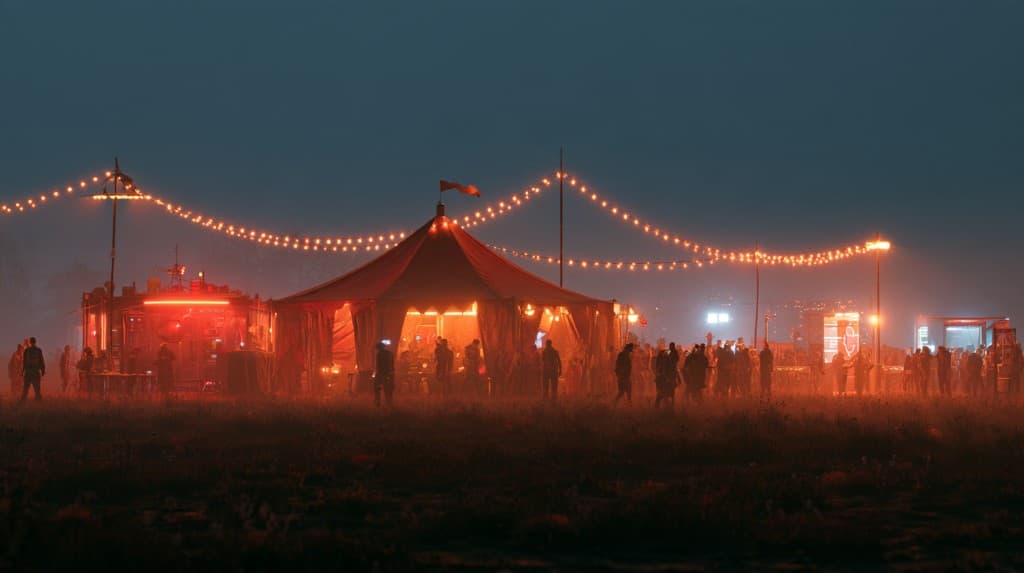
Frontiers in Public Health research on Zendo peer support and sanctuary spaces—the third pillar between EMS and security, Serenity triage, ASCI theory, and the RAVE Act chilling effect.
Introduction
Imagine this scenario in the crowd, dazzling lights, and deafening music of a large-scale music festival or a party with tens of thousands of attendees: a participant, due to the use of a specific substance or exposure to excessive sound waves and visual stimuli from the environment, falls into extreme panic, sensory overload, or re-experiencing psychological trauma. They are trembling all over, experiencing rapid heartbeat and disordered speech, unable to communicate normally with the outside world.
At this moment, two highly mature emergency response systems are typically operating on-site—Emergency Medical Services (EMS) and Police/Security. However, after conducting a rapid assessment, medical personnel find that their physiological signs (blood pressure, respiration, consciousness) are relatively stable, with neither acute substance overdose nor severe traumatic bleeding. Consequently, medical stations are often unable to provide long-term psychological soothing and emotional companionship. On the other hand, if security or police personnel intervene, they are very likely to misjudge this psychological distress as a security threat, potentially triggering forced sedation or legal arrest.
This individual, caught in an acute psychological crisis while remaining physiologically stable, thus falls right into the massive gap of the traditional party safety framework.
A study published in Frontiers in Public Health delves into the peer support and sanctuary space model promoted by the Zendo Project. This study reveals a key trend: in non-clinical natural environments, utilizing professional psychedelic harm reduction services as a "complementary intermediate pathway" is precisely the crucial answer to filling the missing links in current large-scale event safety structures.
I: The Absence of the "Third Pillar" in Large-Scale Event Safety Systems
The current emergency and safety architecture for global mass gatherings has long been built on a "Two-Pillar Reality":
- The First Pillar: Emergency Medical Services (EMS)—focusing on physiological first aid, overdose management, trauma, and maintenance of vital signs.
- The Second Pillar: Police and Security—focusing on crowd control, violence prevention, and law enforcement.
However, neither of these two pillars is specifically designed to handle acute psychological crises under "Altered States of Consciousness." This "system mismatch" leads many crowds experiencing anxiety, dissociation, or emotional breakdown into a dilemma: medical staff turn them away because they have no physiological danger, while the crowd themselves refuse to seek help due to the fear of exorbitant ambulance costs or facing legal capture. They would rather hide in dark corners bearing the extreme risk of psychological trauma than seek help from the on-site systems.
Examining this from the dual perspectives of cultural thought and public health, treating "altered states of consciousness" purely as security threats or medical pathologies reflects a modern societal lack of inclusion toward diverse psychological experiences. Therefore, mass-gathering health literature has begun advocating that independent "Festival Health"—possessing professional psychological support capabilities alongside police and medical services—must be officially recognized as the third pillar of large-scale event safety systems.
II: The Legal "Chilling Effect"—How the RAVE Act Accidentally Exacerbated Health Risks
Since psychological sanctuary spaces at party venues are so vital, why have many event organizers hesitated to provide them publicly? The answer lies in the fear and policy constraints generated by rigid regulations.
In the United States, the federal RAVE Act (Illicit Drug Anti-Proliferation Act) passed in 2003 created severe gray-area legal liabilities. Event organizers are intensely worried that publicly providing harm reduction services, peer sanctuaries, or drug-checking tools on-site will be legally defined as "encouraging or permitting illegal substance use," thereby subjecting them to criminal prosecution or preventing them from obtaining event insurance. Festival organizers in places like Canada face similar anxiety regarding legal liability.
This policy pressure has generated a strong "Chilling Effect." Studies indicate that over 32 million people in the U.S. have tried psychedelic substances in their lifetime. When punitive drug policies attempt to replace "management" with "prohibition," the result does not reduce substance use; instead, it pushes the public toward unprotected underground environments. The intense environmental stimuli at party venues combined with the effects of substances easily trigger acute psychiatric responses.
Interestingly, the political wedge that broke this policy stalemate came from advocacy by veterans' groups. Due to traditional treatment bottlenecks for Post-Traumatic Stress Disorder (PTSD) and Traumatic Brain Injury (TBI), veterans' groups pushed forward the legalization process of psychedelic medical research:
- Texas SB 2308 Bill (2025): The Governor signed a bill authorizing state funding to support research on Ibogaine for veterans' mental and neurological health.
- U.S. Executive Order 14,401 (April 2026): Instructed federal agencies to accelerate psychedelic drug research, appropriate review pathways, and regulatory coordination.
The breakthrough on veterans' issues not only revealed the moral dilemma of traditional drug control but also drove a societal rethinking of safety networks for non-clinical psychedelic experiences.
III: Welfare Economics Proves That "Companionship" Generates Massive Economic Value
This study utilized Welfare Economics models for the first time to analyze how peer support services generate massive economic and social value for participants and event organizers.
The core formula of welfare economics is: Social Value = Consumer Surplus + Producer Surplus.
In a music festival context:
- Consumer Surplus: The value of psychological and spiritual experiences participants gain from the event (such as spiritual growth, transcendent experiences, creative inspiration).
- Producer Surplus: The organizer's total revenue minus operational costs. Typically, security, medical, and insurance claims account for 15% to 30% of a music festival's total operational costs. Frequent EMS hospitalizations and forced security interventions dramatically increase insurance claims and litigation risks.
When participants experience "Challenging Experiences" induced by psychedelic substances, outcomes diverge into two paths:
- Good Resolution (G): Receiving appropriate companionship and psychological soothing, stabilizing, and safely returning to the event or being picked up by friends. Zendo peer intervention provides empathetic companionship and psychological integration, restoring peace and preserving the value of the event experience.
- Bad Resolution (B): Conditions worsen, triggering violence, forced sedation, ambulance transport, or legal arrest. Without peer intervention, panic persists, leading to forced hospitalization or arrest, dropping the experiential value to a minimum, and even bringing long-term psychological trauma.
Peer support services reduce the burden on first-aid stations and security, prevent unnecessary hospitalizations, and create a net increase in total social welfare.
IV: Invisible Technology Designed for "Altered States of Consciousness"—The Serenity System
Collecting data at party venues is exceptionally challenging. In this study, the team clearly distinguished the roles of two systems: the research team used the professional academic platform REDCap to collect questionnaires and survey data from medical personnel; internally, Zendo developed and deployed an on-site electronic medical record and workflow management system named Serenity.
The evolution of the Serenity system embodies a philosophy of "Technology Designed to Minimize Technological Intrusion":
- From Paper to a Single iPad: Early on-site operations featured hundreds of trained volunteers, and paper records often suffered from time discrepancies or omissions. When digitalization was first introduced in 2019, Zendo adopted an extremely cautious strategy—deploying only a single iPad for the entire site, managed by a dedicated Logkeeper, to avoid prematurely introducing complex technology that might trigger defensiveness among volunteers and the crowd.
- Double-Sided Interface: Under the emotional pressure of an altered state of consciousness, screen light, typing sounds, and device interaction can easily be perceived by individuals as "monitoring, surveillance, and a lack of trust." Therefore, Serenity designed a double-sided interface: Sitters never touch any electronic equipment during companionship, and all data is entered by backend logkeepers and medical triage staff. From the perspective of the person being supported, technology is completely invisible.
- Passive Accountability: In a gray-area environment, staff are prone to anxiety about being "monitored." The Serenity system is not designed around "punishing/blaming individuals," but rather analyzes system logs to find "process bottlenecks" (e.g., if registration delays across multiple shifts exceed 15 minutes, it indicates training or workflows need optimization rather than staff dereliction of duty).
V: The Perfect Interlocking Model of Medical Triage and Peer Support
The operation of the Zendo Project is not random community care; it is a "Three-Tier Dynamic Triage System" and "Nested Oversight Model" tightly interlocked with on-site medical services.
Zendo Triage Model — When a guest in distress enters the site, a rapid initial safety and medical screening is conducted:
- Public Safety Concern: Active violence, weapons, or immediate threats to others → Transferred to Security/Public Safety Response.
- Medical Concern: Abnormal vital signs, loss of consciousness, overdose, severe bleeding, or risk of self-harm → Transferred to on-site EMS or first-aid stations.
- Psychological Concern (Physiologically Stable): No immediate safety or medical risk, presenting with panic, anxiety, sensory overload, or emotional confusion → Enters Zendo Peer Support.
Nested Oversight and Role Boundaries
- Professional Medical Screening and Peer Roles: Volunteers staffing the entrance triage all hold certified medical professional qualifications. However, inside the Zendo system, these licensed medical personnel operate as "trained peer volunteers" according to organizational protocols rather than exercising clinical medical practices under their personal licenses. This supports high-quality initial physiological screening while strictly adhering to the non-clinical boundaries of peer companionship.
- Geographical Proximity and Unified Command: The Zendo sanctuary space is always situated immediately adjacent to the Basic Life Support (BLS) first-aid station. When Zendo is nested next to the first-aid station, the on-site attending physician or Lead Paramedic serves as the unified commander. Once an individual's physiology deteriorates during the companionship process, a dynamic escalation can be immediately performed to transfer them to the medical team.
Zendo’s Four Operational Principles — During the companionship process, volunteers strictly execute four principles refined from over a decade of field experience:
- Safe Space: Provide a warm, low-sensory-stimulation, respectful, and unbiased environment.
- Sitting Not Guiding: Do not attempt to act as a psychotherapist or guide the direction of the experience; merely guard beside them with a calm posture.
- Talking Through Not Down: Accompany the other party through their emotions without belittling, lecturing, or condescendingly suppressing their experience.
- Difficult Is Not the Same as Bad: Acknowledge that while challenging experiences are painful, if properly soothed in a safe environment, they can often translate into profound psychological insights and growth.
VI: The ASCI Theory—Transforming "Empathetic Companionship" into Public Health Infrastructure
The biggest theoretical breakthrough of this paper is the proposal of the "Theory of Altered State Compassionate Integration (ASCI)."
Contemporary health economics and medical management systems possess a fatal blind spot: the system only records "billable, institutionalized transactions" (such as ambulance dispatches, emergency hospitalizations, forced sedation, drug injections). However, this billing-oriented perspective completely ignores the massive preventative value generated by non-transactional, de-escalated, empathy- and presence-based peer companionship.
The ASCI theory deeply deconstructs this:
- De-commodified Empathic Labor: The strength of companions stems precisely from their "non-expert, de-classed" peer positioning. The person being supported does not need to pay fees, perform, or prove themselves. This space—which suspends commercial transactions and power hierarchies—can maximize the reconstruction of an individual's sense of safety and trust.
- Soft Infrastructure: Traditional economics views empathy as an insignificant "party amenity," but ASCI proves it is a crucial "soft infrastructure" for maintaining the stability of the large-scale event public health system. It successfully builds a highly flexible buffer defense line between non-intervention and high-cost medical interventions.
Conclusion and Future Outlook
Reviewed under the premise of academic rigor, this study is essentially a "Formative Mixed-Methods Field Application." Researchers collected data at two large-scale music festivals in Denver (one electronic music concert of 5,000–10,000 people and one rock concert of 10,000–20,000+ people).
Due to the extreme challenges of collecting questionnaires after late-night shifts, the final study retained 19 pre-test and 5 post-test questionnaires (of which 4 completely answered the main operational items). Among the feedback from these 4 medical personnel who completed the evaluation:
- All of them (4/4) believed Zendo successfully reduced the burden on the on-site medical team.
- Based on on-site observations, medical personnel made counterfactual estimates, projecting that Zendo's intervention successfully prevented 6 to 10 potential incident escalations, forced sedations, or emergency hospitalizations per single event.
It must be emphasized that these data represent the subjective observations and estimates of frontline medical personnel rather than causal effects verified through large-scale Randomized Controlled Trials (RCTs). However, this feasibility study successfully demonstrated the viability of incorporating peer support into public health evaluation systems.
This study reminds us: the popularization of psychedelics and psychoactive substances in modern non-clinical environments is an undeniable established fact. Policymakers, event organizers, and medical systems must shake off past purely punitive or neglectful mindsets, turning toward data-driven, empathy-based public health integration models.
Peer companionship and psychological sanctuary spaces are not pretentious party amenities, but indispensable "third pillars" of modern mass gatherings.
When public substance use and psychological crises have become established facts at party venues, is our society prepared to officially upgrade "empathy and companionship" into legitimate public health infrastructure?